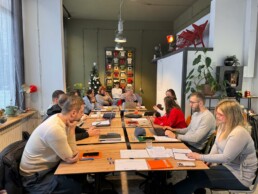
The programme of this workshop, organised by Mediacentar Sarajevo, included meetings with the team of trainers from Ukraine, France and Bosnia; presentations on the spread of fake news during and after war; case studies from Bosnia and Ukraine; sharing techniques for debunking false information; and discussions on story angles that could illustrate the tangible consequences of disinformation in these contexts… One of the Ukrainian trainers, whose identity cannot be disclosed, shared his personal story: “I had to flee Luhansk in 2014, then Severodonetsk, where I had sought refuge after 2022. My parents cannot leave the occupied territory. I will probably never see them again. I will not be able to bury them, and they will never meet my children.”
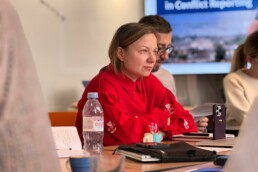
“All of this is the result of lies spread during wartime. Disinformation was used as a political tool to justify the invasion of Luhansk in 2014. The Russians use it to cover up war crimes or scam the families of prisoners. On one occasion, Russian forces posted false information on Telegram, announcing an evacuation for tactical reasons. This had dramatic consequences: civilians believed they really had to evacuate and ended up coming under enemy fire,” he explained.